

Pakistan’s healthcare system is evolving, but one critical pillar is still missing from the national conversation: clinical pharmacists.
In many countries, clinical pharmacists are the backbone of hospitals, ICUs, emergency units, and primary care teams. They prevent medication errors, optimize therapy, reduce hospital costs, and improve patient outcomes.
But in Pakistan?
Their role remains massively underutilized not due to lack of talent, but lack of system-level integration. With rising chronic diseases, medicine misuse, self-medication culture, and antibiotic resistance at alarming levels, Pakistan needs clinical pharmacists more today than ever before. This blog explores why, supported by real-world challenges, international comparisons, and the future that Pakistan can build.
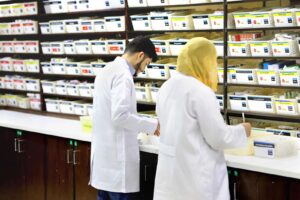 What Exactly Does a Clinical Pharmacist Do?
Clinical pharmacists are not just “medicine experts” they are medication strategists.
Their key responsibilities include:
- Ensuring safe medication therapy
- Preventing drug interactions & dosing errors
- Participating in rounds with doctors
- Monitoring patient responses
- Managing ICU & high-risk medication protocols
- Adjusting doses based on kidney/liver function
- Educating patients on correct medicine use
- Ensuring antibiotics are used appropriately
In modern hospitals, they are as essential as doctors and nurses.
The Harsh Reality: Pakistan’s Medication Crisis
Pakistan’s medication landscape is struggling with issues that clinical pharmacists are uniquely equipped to solve:
a) Medication Errors Are Extremely Common
- Wrong drug.
- Wrong dose.
- Wrong timing.
- Drug interactions.
These happen every day in Pakistani hospitals and most go unreported.
b) Antibiotic Misuse Is a National Emergency
Pakistan is one of the top 5 countries for antibiotic resistance.
People swallow antibiotics like painkillers and doctors often overprescribe them.
Clinical pharmacists are trained to stop this.
c) Self-Medication Culture Is Out of Control
From flu medicines to steroids, Pakistanis treat symptoms without diagnosis. A clinical pharmacist can guide safe options and reduce harm.
d) Polypharmacy Is Increasing
More patients are on 5–10 medicines at once, especially elderly and cardiac patients.
Without a clinical pharmacist, no one checks for harmful combinations.
e) Chronic Diseases Are Rising Rapidly
Diabetes, hypertension, cholesterol, obesity
Pakistan needs medication therapy experts to manage long-term treatment.
 How Clinical Pharmacists Improve Hospital Outcomes?
They Reduce Medication Errors
Studies show clinical pharmacists cut medication errors by up to 70%.
They Lower Patient Costs
Optimized therapies = fewer complications = shorter hospital stays.
They Improve Survival in Critical Care Units
ICUs with clinical pharmacists have better survival rates because medication protocols become safer and more personalized.
They Support Doctors, Not Replace Them
Doctors diagnose.
Clinical pharmacists optimize medications.
Together, they build safer treatment.
They Educate Patients Effectively
Patients understand:
- When to take medicines
- How to take them correctly
- What side effects to monitor
- How to avoid interactions
This dramatically improves treatment success.
Why Pakistan Can’t Progress Without Clinical Pharmacists?
Pakistan has unique challenges:
- Over 70% population self-medicates
- Limited hospital staff
- No standardized medication safety programs
- Weak antibiotic stewardship
- High patient load
- Minimal patient counselling
Clinical pharmacists can fill these gaps immediately.
Every major healthcare improvement plan in the world includes them. Pakistan must follow the same path.
International Models Pakistan Can Learn From
United States:
Clinical pharmacists are mandatory in hospitals, emergency units, oncology departments, and ICUs.
UK:
Pharmacist prescribers now support GPs and manage chronic patients independently.
Saudi Arabia & UAE:
Clinical pharmacy is one of the fastest-growing sectors; every tertiary hospital has a full pharmacist-led medication safety department.
India:
Rapidly integrating clinical pharmacists into hospitals to handle medication therapy management.
Pakistan has the talent it only lacks the structure.
The Future of Healthcare in Pakistan with Clinical Pharmacists
If integrated properly, Pakistan will experience:
- Fewer medication errors
- Better chronic disease control
- Stronger antibiotic stewardship
- Improved hospital ratings
- International healthcare alignment
- Better emergency & ICU outcomes
- High patient satisfaction
Clinical pharmacists are not optional; they are essential to modern healthcare.
What Is Stopping Pakistan Right Now?
- Lack of awareness- even many doctors don’t know how clinical pharmacists assist.
- No defined hospital roles- no standard hiring structure.
- Poor government recognition- policies are vague.
- Limited collaboration between pharmacists and doctors.
- Financial constraints in public hospitals.
- No national medication safety program.
These barriers are real but solvable.
 How Pakistan Can Build a Strong Clinical Pharmacy System
Step 1: Formal hospital integration
Each hospital must create medication therapy departments.
Step 2: Mandatory involvement in patient rounds
Critical care, oncology, cardiology, surgery; pharmacists must be present.
Step 3: Antibiotic stewardship programs
Clinical pharmacists should lead these nationwide.
Step 4: Medication counselling units
Counselling should be a required step before dispensing.
Step 5: Government recognition of specialization
Clinical pharmacists need official status, certification, and job hierarchy.
Conclusion: Pakistan’s Healthcare System Needs This Change
Clinical pharmacists have the power to transform Pakistan’s medication landscape.
They reduce errors, save lives, lower costs, and bring global healthcare standards to the country.
The future is clear: Pakistan cannot advance without integrating clinical pharmacists into its hospitals.
FAQs
1. Is a clinical pharmacist the same as a retail pharmacist?
No. Clinical pharmacists work inside hospitals alongside doctors, optimizing drug therapy.
2. Do clinical pharmacists prescribe medicines?
In some countries, yes. In Pakistan, they recommend medication adjustments but do not prescribe independently.
3. Are clinical pharmacists needed in every hospital?
Yes, especially ICUs, emergency rooms, oncology wards, and cardiac units.
4. Why are medication errors common in Pakistan?
Lack of staff, high patient loads, no medication safety programs, and limited pharmacist involvement.
5. Can clinical pharmacists reduce hospital costs?
Absolutely. By optimizing therapies, they prevent complications and shorten hospital stays.
6. How can Pakistan adopt clinical pharmacy faster?
By creating clinical pharmacy departments, recognizing specialization, and integrating pharmacists into patient rounds.
Final Note
In the future, MediZin by BSF aims to play a key role in improving Pakistan’s healthcare standards by promoting safe medication practices, ensuring authentic medicines, and supporting the evolution of clinical pharmacy services across the country. Their vision aligns with a healthcare system where medication safety, patient counselling, and clinical expertise become the new standard.